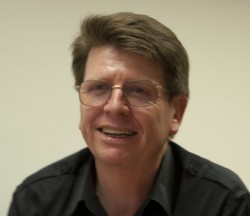
Ralph Horne

Professor Ralph Horne is the Director of the Global Compact Cities Programme. Ralph’s expertise is in urban social and policy change for sustainable design and development. He has extensive experience of environmental techniques and sustainability appraisal and has a specific research interest in urban transitions, including socio-technical relations in the context of climate change and resource scarcity.
Ralph has led over 100 urban research projects, collaborating with researchers, cities, governments and commercial organisations across all continents and including studies of housing and development in Europe, Australasia, South East Asia and Latin America. He combines research leadership and participation in research projects concerning the environmental, social and policy context of production and consumption in the urban environment.
He held the positions of Director, Green Building Council of Australia from 2010-13 and Council Member, Built Environment Industry Innovation Council, Commonwealth Government, Australia from 2008-12. He also holds the position of Deputy Pro-Vice Chancellor Research for the College of Design and Social Context at RMIT University, where he supports research performance through the development of new and existing research groups and centres, mentoring future research leaders and providing strategic leadership in support of research activity across the college.
In his Directorship role with the Cities Programme, Ralph is responsible for strategy and engagement, development of the programme, governance, business planning, academic engagement, staff, resources and reporting.
Resources
Actions
- Sustainable housing’s expensive, right? Not when you look at the whole equation
- Built environment advises the Australian Parliament
- Warnings about Australia’s housing crisis
- Ethical Cities event, Barcelona
- New book explores the rise of Sustainability Citizenship
- Barcelona Ethical Cities event
- “Ethical Cities: Locking in Liveability” Urban Thinkers Campus
- Rotorua racing towards sustainability
- The UN Global Compact – RICS Responsible Business Best Practice Toolkit for the Land, Construction & Real Estate Sector
- Australian launch of the ‘Guide to the Global Compact for Local Government’
- An injection of new resources and expertise
- New Mayor of Quito Commits to the Global Compact and to Address Climate Change
- Global Compact Strengthens Urban Sustainability Efforts through Agreement with RMIT University
- Medellín shines hosting the 7th World Urban Forum