Professor Jago Dodson
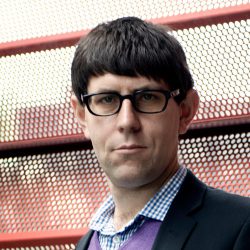
Jago Dodson was appointed Professor of Urban Policy and Director of the Centre for Urban Research at RMIT University in 2014.
With a wide interest in theoretical and applied urban questions, Professor Jago Dodson has an extensive record of research into housing, transport, urban planning, infrastructure, energy and urban governance problems. He has contributed extensively to scholarly and public debates about Australian cities and has advised national and international agencies on urban policy questions.
Before taking his current role at RMIT, Jago held positions at Griffith University, as a Research Fellow from 2004–2014 and as Director of Griffith’s Urban Research Program from 2011–2014.
Jago’s PhD studies investigated problems in housing policy reform in Australia and New Zealand focusing on the production of policy ‘truths’ and the subjective constitution of housing assistance recipients.
During his early post-doctoral enquiries, he investigated transport questions including important interventions into transport policy debates in New Zealand and provided new insights into transport disadvantage in Australian cities. Subsequent work addressed a wide range of problems relating to transport, housing and metropolitan governance as well as the energy dimensions of suburbanisation.
A highlight has been his new insights into the problem of ‘oil vulnerability’ in Australian cities, particularly household socio-economic stresses from rising housing and transport fuel costs, and a new method – ‘the VAMPIRE index’ – to assess this phenomenon. This work won the John H Taplin Prize for Best Paper at the 2006 Australasian Transportation Research Forum. Jago has also provided summary reviews on housing and social theory and on planning and human geography, to key reference texts.
Recent work has studied questions of urban socio-technical practices within suburbia and the challenges of managing compact urbanisation and housing markets, as well as problems of urban governance and infrastructure planning. In addition Jago has assessed the role of the private development sector in climate change adaptation; the national broadband network and metropolitan planning; private motor vehicle fuel efficiency; and national level urban policy making in Australia, among other topics. His most recent book is Australian Environmental Planning (2014) co-edited with colleagues Jason Byrne and Neil Sipe which won the Planning Institute of Australia National Award for Cutting Edge Research.
Jago’s research record includes more than 70 publications, with one sole author, one joint author and one joint-edited book and 26 refereed journal articles, 18 book chapters and 30 refereed conference papers. He has contributed extensively to scholarly, policy and public debates on urban problems in Australia and internationally.
Jago currently supervises six PhD students and welcomes enquiries from prospective PhD scholars on topics relevant to his expertise.