Sarah Pink

  • Ethnography
  • Environmental Sustainability and Resilience
  • Digital Technologies

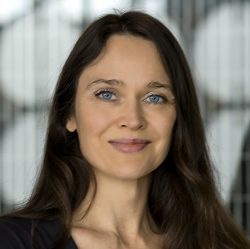
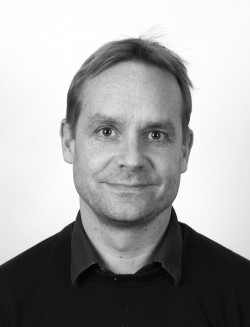
Professor Sarah Pink is Director of the Digital Ethnography Research Centre, and Professor of Design and Media Ethnography at RMIT University. She is also Visiting Professor in the Schools of Civil and Building Engineering and Design at Loughborough University, UK, and in the Swedish Centre for Applied Cultural Analysis at Halmstad University, Sweden, and Guest Professor at the Free University, Berlin. She is also a Director of the Future Anthropologies Network of the European Association of Social Anthropologists.

Professor Pink’s research is interdisciplinary and combines academic scholarship with applied practice. She works across a range of research council funded and industry partnered projects on themes relating to digital technologies, environmental sustainability and resilience, and safety. Questions including the relationship between the technological possibilities and everyday human improvisation, and possible futures are at the centre of her work and she is known internationally for her innovations in visual, sensory and digital ethnographic research methodologies.

Recent projects include her work on slow cities, environmental sustainability and imagined futures, energy demand reduction, water, laundry and sustainability in urban Indonesia, safety, and digital technologies in everyday life (across a number of current projects). She disseminates her work through academic writing, web-based projects and documentary film.

Professor Pink is based in Melbourne, Australia.
Similar Posts

  • Malcolm Borg

    Dr Malcolm Borg is the Regional Liaison for the cities and regions of Malta for the UN Global Compact – Cities Programme. He also holds a Global Advisor role. Malcolm is an urban planner by profession and is currently engaged in project management and funding. He specialised in urbanisation and planning at the University of...

  • Tommaso Durante

    Dr Tommaso Durante is an academic specialising in global imaginary. He is also an international award-winning visual artist. Tommaso makes regular and valuable contributions to the Global Compact Cities Programme’s visual communications and archives. Tommaso moved from Italy to Australia in 2001 under a visa for distinguished talent for art. His artistic production deals with...

  • Ralph Horne

    Professor Ralph Horne is the Director of the Global Compact Cities Programme. Ralph’s expertise is in urban social and policy change for sustainable design and development. He has extensive experience of environmental techniques and sustainability appraisal and has a specific research interest in urban transitions, including socio-technical relations in the context of climate change...

  • Rosane de Souza

    Brazil Rosane is the regional liaison for the Cities Programme in Brazil, holding the position of Country Contact Point, Brazil. Rosane de Souza is a journalist, with a Masters in International Marketing (FAE Business School – Curitiba) and Social Management (Carl Duisberg Gesellschaft – Alemanha), and also in Responsible Management for Sustainability (Fundação Dom Cabral...

  • Usha Iyer-Raniga

    Associate Professor Usha Iyer-Raniga is Deputy Head, International at the School of Property and Construction Management, RMIT University. She is Director of the Sustainable Buildings Innovation Lab (SBiLab) at the School of Property, Construction and Project Management, dealing with research on thermal comfort, energy efficiency and sustainability in the built environment. Recently, Usha has been...

  • Dennis Obel

    Dennis Obel is an international development professional. His most recent role was in Timor Leste as a Technical Adviser with a HIV/AIDS program. Dennis has a Master of Project Management from the University of Southern Queensland and a Bachelor Arts from the University of Makere, Uganda. Dennis completed his internship with the Global Compact Cities...