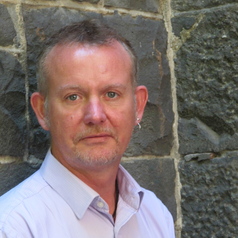
Darryn McEvoy
- Climate Change Adaptation
- Urbanisation in Developing Island States
- Resilience
Professor Darryn McEvoy is a leading climate change academic and practitioner. He has led the Climate Change Adaptation Program at RMIT University since 2009. He has also held the positions of Deputy Director for the Victorian Centre for Climate Change Adaptation Research (VCCCAR, 2009 – 2014) and Senior Researcher at the International Centre for Sustainable Development and Integrated Assessment (ICIS, 2006 – 2009) at the University of Maastricht in the Netherlands. Darren has an active role in research, acting as Chief Investigator to numerous research projects which are often multi-disciplinary and multi-institutional; crossing local, regional, national and international scales.
A qualified geographer with an interest in interdisciplinary ‘solutions-oriented’ action research, Darren’s expertise covers climate risk assessment and adaptation, innovative adaptation practice (both institutions and technologies), institutional adaptive management (and adaptation as a process), vulnerability assessment, the building of local adaptive capacity and the synergies and conflicts between the adaptation and mitigation agendas. Of particular interest is the translation of theory into practice and highlighting the implications for climate risk management and decision-making (including both public and private actors).
Amongst his most recent publications are:
- Chhetri, P.,Corcoran, J.,Gekara, V.,Maddox, C.,McEvoy, D. (2015). Seaport resilience to climate change: mapping vulnerability to sea-level rise In: Journal of Spatial Science, 60, 65 – 78
- White, C.,Franks, S.,McEvoy, D. (2015). Using subseasonal-to-seasonal (S2S) extreme rainfall forecasts for extended-range flood prediction in Australia In: Proceedings of the International Association of Hydrological Sciences, 370, 229 – 234
- Ahmed, I.,McEvoy, D. (2014). Post-tsunami resettlement in Sri Lanka and India: Site planning, infrastructure and services In: Journal of Disaster Resilience in the Built Environment, 5, 53 – 65
- McEvoy, D.,Ahmed, I.,Trundle, A.,Sang, L.,Diem, N.,Suu, L.,QUOC, T.,Mallick, F.,Rahman, R.,Rahman, A.,Mukherjee, N.,Nishat, A. (2014). In support of urban adaptation: a participatory assessment process for secondary cities in Vietnam and Bangladesh In: Climate and Development, 6, 205 – 215
- Fuenfgeld, H.,McEvoy, D. (2014). Frame divergence in climate change adaptation policy: insights from Australian local government planning In: Environment and Planning C: Government and Policy, 32, 603 – 622
- McEvoy, D.,Mullett, J. (2014). Enhancing the resilience of Australian seaports to a changing climate In: Applied studies in climate adaptation, John Wiley and Sons, United Kingdom
- Mitchell, D.,Jacot des Combes, H.,Myers, M.,McEvoy, D. (2014). Addressing land issues in disaster risk management in the Pacific island countries In: Land Tenure Journal, 1, 105 – 135
- Howes, M.,Grant-Smith, D.,Reis, K.,Bosomworth, K.,Tangney, P.,Heazle, M.,McEvoy, D.,Burton, P. (2013). Rethinking disaster risk management and climate change adaptation In: National Climate Change Adaptation Research Facility (NCCARF Griffith, Australia
- Fuenfgeld, H.,Millin, S.,McEvoy, D. (2013). Framing adaptation in the Victorian context – case study report of City of Greater Bendigo In: Victorian Centre for Climate Change Adaptation Research (VCCCAR) Melbourne, Australia
- Fuenfgeld, H.,Millin, S.,McEvoy, D. (2013). Framing adaptation in the Victorian context – case study report of City of Melbourne In: Victorian Centre for Climate Change Adaptation Research (VCCCAR) Melbourne, Australia
Professor McEvoy is based in Melbourne, Australia.
Actions
- Growing Expertise: Meet our new Global Advisors
- Partnering to tackle climate change in the Solomon Islands
- Tackling Climate Change and Urban Resilience in the Asia Pacific Region