Michael Nolan

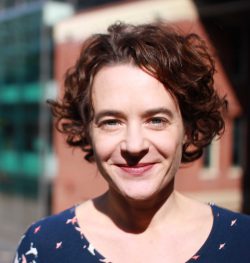
Michael Nolan is the inaugural Chair of the Global Compact Cities Programme. He joins us from a global role which focused on resilient cities with AECOM, an urban planning, infrastructure and environmental consultancy. Michael has over 20 years’ experience in sustainability, climate adaptation and resilience for government and private sectors.

In his role at AECOM, Michael developed a Disaster Resilience Scorecard for cities for the UN International Strategy for Disaster Reduction in collaboration with IBM. He has extensive experience in sustainable infrastructure, climate change adaptation and resilience in Australia, the United States, Canada, China, India, Brazil, New Zealand and the United Kingdom.

Michael has led over 120 climate change impact, risk assessment, adaptation and resilience projects relating to ports, road, rail, local government, water, flood management, power, mining, buildings, facilities, coasts, states and cities. Michael represented the Infrastructure Sustainability Council of Australia in developing the Australian Standard AS5334 Climate Change Adaptation for Settlements and Infrastructure.

Michael is the Resilient Cities lead for the United Nations R!SE initiative focused on risk sensitive investment. Michael has also supported the development of strategy tools for the 100 Resilient Cities programme pioneered by the Rockefeller Foundation.

In his role as Chair of the Cities Programme, Michael supports the programme’s strategic direction and growth. In particular, he aims to increase private and public sector collaboration to increase the liveability and resilience of cities.

Similar Posts

  • Dr Fiona Macdonald

    Dr Fiona Macdonald is a Vice-Chancellor’s Senior Research Fellow with the School of Management and the Centre for Sustainable Organisations and work at RMIT University. Fiona has many years’ experience of practical policy-focussed research related to work, employment, training and skills, including policy and program evaluation and development. Fiona’s current research focus concerns the construction...

  • Jesse Blom

    Jesse Blom is a passionate and highly skilled urban agriculture advocate and practitioner and more recently, freshwater specialist. He is currently holds the position of Program Manager at the Johns Hopkins Center for a Livable Future in Baltimore, MD, USA. He is developing an educational program on food systems, using an urban agriculture / aquaponics...

  • Felicity Cahill

    Felicity Cahill, a lawyer and international development practitioner, has had a range of diverse roles with the Cities Programme since she joined in 2011. One of her most significant contributions was her lead research role in a lengthy research project related to the resettlement of the Vila Chocolatão community in Porto Alegre, Brazil (2012-2015). She...

  • Walid Nagi

    Walid Nagi is the Chief of Local Networks for the United Nations Global Compact and representative of the Global Compact Cities Programme International Secretariat in New York. In his role with the Global Compact, Walid coordinates and manages close to 100 Global Compact Networks with the objective of deepening the the business sector’s knowledge of...

  • Kristian Vaughn

    Kristian Vaughn was the Inaugural Senator Herb Kohl-Global Compact Cities Programme Intern, which is based in Milwaukee in the USA. He commenced his internship in October 2013. Kristian is currently pursuing a Master of Arts in Urban Planning and Public Administration at the University of Wisconsin – Milwaukee. Kristian was based at the Milwaukee Water...

  • Ralph Horne

    Professor Ralph Horne is the Director of the Global Compact Cities Programme. Ralph’s expertise is in urban social and policy change for sustainable design and development. He has extensive experience of environmental techniques and sustainability appraisal and has a specific research interest in urban transitions, including socio-technical relations in the context of climate change...