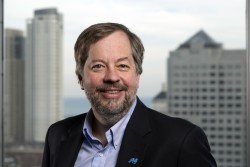
Dean Amhaus

  • Water Systems and Services
  • Sustainable Economic Development
  • Business Incubation

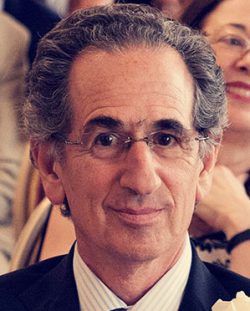
Dean Amhaus has served as the first President and CEO of The Water Council since March 2010. The Council was formed with the purpose of growing the Milwaukee region into a world hub for water research, education and economic development. The only organisation of its kind in the United States, the Water Council is successfully coalescing these attributes into a powerful force that is garnering international recognition.

The Council’s most significant achievement occurred in September 2013 with the opening of the Global Water Center, a one of a kind water technology research and business accelerator located in a 98,000 square feet /30,000 square meter, seven-story refurbished Silver LEED warehouse in Milwaukee’s downtown area. The Center was completely leased within 18 months of its opening. One of the programs within the Center is The BREW, which assists water technology entrepreneurs with developing their companies and expanding their commercialisation opportunities.

Under Dean’s leadership, the Council has also developed a national Center of Excellence for Freshwater Innovation and Small Business Development. A contract from the US Small Business Administration and the support of JP Morgan Chase & Co. are growing the pool of investment dollars in water technology.

Dean has led Milwaukee’s relationship with the Global Compact Cities Programme since 2009 and the city’s Innovating-level activities.

Dean is based in Milwaukee, USA.

Connected Cities

  • Milwaukee

Actions

  • Growing Expertise: Meet our new Global Advisors
  • Milwaukee advancing ‘One Water Regions’
  • Milwaukee and Leeuwarden collaborate on water
  • The Water Council – one of USA’s leading innovators
  • Research: Milwaukee World Water Hub
  • Milwaukee’s Discovery World Recognised as an Innovating Centre.
  • Milwaukee Wins U.S Water Prize

Similar Posts

  • Get Involved

    For Cities City, state and municipal governments make a commitment to the United Nations Secretary General to advance sustainable development and the Ten Principles of the United Nations Global Compact in the areas of human rights, labour, the environment, anti-corruption and good governance. They are encouraged and supported to work in partnership with the private...

  • Adrian Thompson

    Adrian Thompson undertook his Global Compact Cities Programme internship as part of his Master of Social Science (International Development) at RMIT University. He has a Bachelor of Social Sciences (Sociology, Community Development) from Southern Cross University. Adrian has a long-standing interest in international development. He was a Volunteer Program Manager with Cambodian projects Make Every...

  • Sam Barrett

    Sam Barrett undertook his internship with the Global Compact Cities Programme during the final semester of his Bachelor of Social Science (Policy & Research) studies at RMIT University. He completed his placement in October 2011 before heading overseas on his first international trip in late 2011/early 2012. He then commenced Honours study in 2012 focused...

  • Zulaikha Hussain Shihab

    Zulaikha commenced her internship with the Global Compact Cities Programme in October 2013 as part of her Bachelor degree in International Relations at LaTrobe University in Melbourne. She is currently studying a Master of International Development at RMIT University. After completing her internship, Zulaikha continued to work with the Cities Programme as an Administration Officer....

  • Marianne Sison

    Dr Marianne D. Sison, PhD, FPRIA, is Deputy Dean, International at RMIT University’s School of Media and Communication in Melbourne, Australia. Her research interests include corporate social responsibility discourse, international public relations, values and organisational communication. A published scholar, she is working on a co-authored book on corporate social responsibility, public relations and community development...

  • About Us

    The UN Global Compact – Cities Programme was founded in 2003 on a platform of collaboration between all levels of government, business and civil society, to address critical global challenges at the local level. It was established by the United Nations Global Compact in the recognition that cities have an important role to play in...