Alexei Trundle

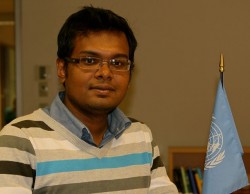
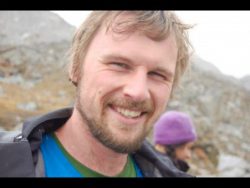
Alexei Trundle is a Research Associate with the UN Global Compact – Cities Programme and has been a researcher with RMIT University’s Climate Change Adaptation Program since 2011, based within the Global Cities Research Institute. Having previously worked for the Commissioner for Sustainability and the Environment in Canberra, Alexei now has a focus on developing and least-developed cities in the Asia Pacific, with an emphasis on better integrating informal, excluded and migratory communities into the urban planning process.

Alexei’s most recent activities include the development of a Climate Vulnerability Report for Greater Port Vila, as part of an ongoing body of work through the United Nations Human Settlements Programme (UN-HABITAT). This study – along with a parallel project in Honiara, Solomon Islands – will form the basis of Urban Resilience and Climate Adaptation Plans for the two cities; a first for the South-Pacific region.

Through leveraging links with academic expertise within RMIT University and the University of Melbourne, as well as partners within the UN Global Compact – Cities Programme community, Alexei hopes to develop collaborative multi-stakeholder models for better engaging, training and building capacity in cities and urban communities across the Pacific.

Alexei’s other ongoing project work includes the development of a Campus Adaptation Plan for RMIT, a Natural Disaster Risk Assessment for the State of Tasmania, and an inventory of frameworks and mechanisms for assessing urban resilience.

Alexei is currently undertaking a PhD at the University of Melbourne.

Actions

  • Partnering to tackle climate change in the Solomon Islands
  • Tackling Climate Change and Urban Resilience in the Asia Pacific Region
Similar Posts

  • Jay Vigoreaux

    Jay is the founder and principal of JVA Group, a leading full service architectural, project management and sustainability firm headquartered in San Juan, Puerto Rico. He began his career in 1984 working for New York City firms Witthoefft Associates Architects and George Cooper Rudolph III Architects before relocating to Puerto Rico in 1987 and starting...

  • UN-HABITAT

    The UN Global Compact – Cities Programme is a Lead Partner in the World Urban Campaign which is coordinated by UN-Habitat. We also collaborate with UN-Habitat in a number of other areas, including resilience, climate change and housing. We organise events within UN-Habitat international gatherings, such as the World Urban Forum and Habitat III. The...

  • Sam Barrett

    Sam Barrett undertook his internship with the Global Compact Cities Programme during the final semester of his Bachelor of Social Science (Policy & Research) studies at RMIT University. He completed his placement in October 2011 before heading overseas on his first international trip in late 2011/early 2012. He then commenced Honours study in 2012 focused...

  • Ginger Ekselman

    Ginger Ekselman completed her research internship with the Global Compact Cities Programme in May 2012 as part of her Master of Social Science (International Development) at RMIT University. Ginger holds a Bachelor of Arts and Bachelor of Social Work. She works as a Case Coordinator with Adult Migrant Education (AMES) in Melbourne. Ginger’s research project...

  • Marianne Sison

    Dr Marianne D. Sison, PhD, FPRIA, is Deputy Dean, International at RMIT University’s School of Media and Communication in Melbourne, Australia. Her research interests include corporate social responsibility discourse, international public relations, values and organisational communication. A published scholar, she is working on a co-authored book on corporate social responsibility, public relations and community development...

  • Cynthia Lam

    Cynthia Lam undertook a research-focused internship with the Global Compact Cities Programme in late 2011/early 2012, where she explored sustainability initiatives in Melbourne local government. Her research internship led her to undertake a minor thesis as part of her Masters degree. Her thesis explores the theory of ecological modernisation and argues its theoretical shortcomings...